
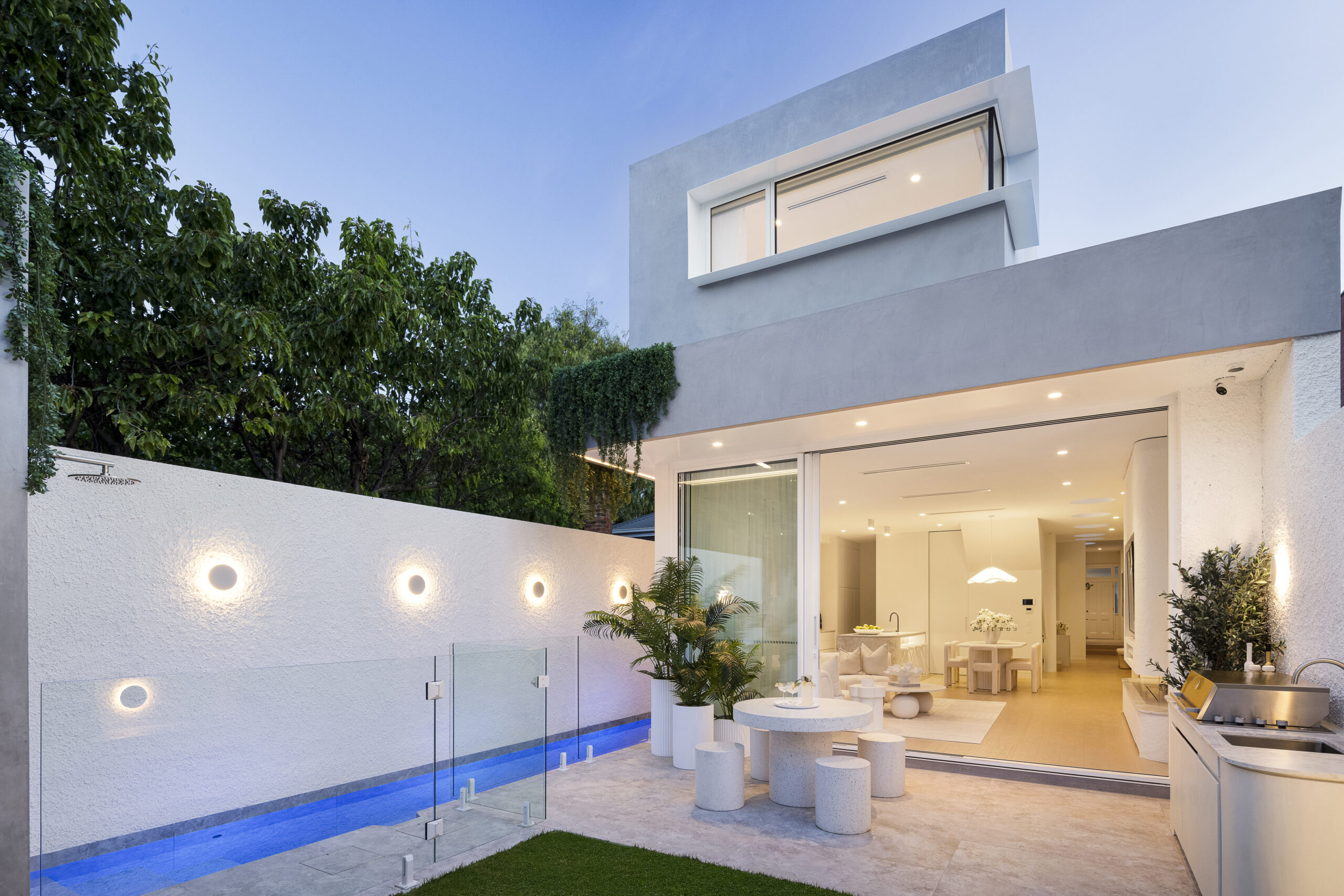
Pool Safety Barriers in Victoria is a critical compliance requirement
Swimming pools add value and enjoyment to a property; however, it is a significant safety responsibility. In Victoria, all safety barriers associated to swimming pools and spas are mandatory. They are designed to minimise the risk of drowning for young children.
What are these requirements?
Based on Victorian regulations, all swimming pools and spas capable of holding water deeper than 30cm must be protected by a compliant safety barrier.
Barriers are required for:
- In-ground pools and spas
- Indoor pools and spas
- Above ground pools and spas, including relocatable and inflatable pools that require on-site assembly
- Bathing and wading pools capable of holding more than 30cm of water
Existing Pools and Spas
If a Pool or Spa already exists on a property than the owner is legally responsible for ensuring safety barriers remains compliant at all times.
New Pools and Spas
Building Regulations 2018 apply strict requirements to the design, construction, and installation of both the pool and its safety barrier.
Key requirements:
- Construction by a registered builder or an owner-builder with a Certificate of Consent
- Self-closing and self-latching gates
- Full compliance with AS 1926.1–2024
- Pool areas must not be directly accessible from a building (for new outdoor pools and spas)
If failing to address these requirements early in the design phase, it can result in permit delays, redesigns, or costly rectification works.
Specification 16 Accessible water entry/exit from swimming pools
If your project involves a commercial space, a multi-residential complex, or a focus on “aging in place,” these four entry methods are key:
1. Ramps and Zero-Depth Entry:
For those who prefer a gradual entry, ramps provide a seamless transition into the water.
-
Fixed or Moveable Ramps: Must have a slip-resistant surface, a maximum gradient of 1:14, and handrails on both sides.
-
Zero-Depth Entry: Similar to a beach entry, these require a single continuous handrail and a level landing area at the bottom (between 900mm and 1100mm deep).
2. Mechanical Lifts
Lifts are essential for users who require significant assistance moving from a wheelchair into the water.
-
Platform Lifts: These must be operable by the user from the pool surround, the platform itself, or from within the water. They must support a minimum weight of 160kg.
-
Sling-Style Lifts: These require specific “clear space” on the pool deck (at least 900mm x 1300mm) to allow for a safe transfer. The sling must be able to submerge at least 500mm below the water level.
3. Aquatic Wheelchairs
When using a ramp or zero-depth entry, a specialized aquatic wheelchair is often required. These chairs must feature:
-
A seat height of at least 430mm.
-
A seat width of at least 480mm.
-
Moveable armrests to allow for easy lateral transfers.
To determine which compliance rules apply to a specific project, refer to the historical timeline of the standard’s editions below:
- AS 1926.1:2024: The current, most up-to-date standard referenced in the National Construction Code.
- AS 1926.1–2012: The immediately preceding standard, widely used across most states for pools built between 2013 and mid-2024.
- AS 1926.1–2007: Superseded the 1993 edition and was applied in various states from mid-2010 to 2013.
- AS 1926.1–1993: Replaced the 1986 version and remained in force for pools constructed during the mid-to-late 1990s and 2000s.
- AS 1926–1986: The foundational version from which modern non-climbable zone (NCZ) requirements evolved.
Here is how Builde can help you:
With the recent release of AS 1926.1:2024, pool safety requirements have become more refined. At Builde, we stay ahead of these legislative shifts so you don’t have to.
Contact Builde today to ensure your project remains safe, compliant, and on track.